A blog for module GDES3004 featuring my ideas and concepts when it came to my final book design.
Tuesday, 30 April 2013
Monday, 29 April 2013
London Trip Research task
London Trip (Task 04)
London Book fair was very good and interesting experience, it just confirmed how competitive the publishing industry is and how different innovative ideas are key when it comes to books in general, not just the children's market.
I began looking at all the different stalls and how different publishers stands were "different" in the fact they were using different techniques in order to appeal to their key market. here are the three ideas i found to be most Innovative:
Make Believe Ideas
Make believe ideas is a company that aims to appeal to young girls age 3-12. it uses educational resources and encorporates fairies and i found this to be very innovative and unusual. every girl dreams to be a fairy and by using this technique would mean the reader will be more likley to pay attention and remember certain things.
they also sell a wide range of cook books, and at the book fair they had a fairy walk around and give people cupcakes or you could decorate your own, i personally think this is an amazing idea as it is more likley to be remembered, the cupcakes were sweet and nice and it made me want to purchase the book and personally cook them myself, i felt this was a good marketing technique and small details such as that will make them very innovative and be remembered. all there books are extremely colourful and feature the same character and style of fairy and i thought they had a really nice finish.
other ideas include think bubbles, dot art to encourage children to express creativity and imagination which are key when it comes to growing up!
ideas such as "activity purse" books with handles to carry and made easy for on the go learning and i generally found the brand very quirky and appealing.
Digital Leaf
Digital leaf is an inspirational childrens book app that can be accessed on apple and android products such as ipad and iphone, it is interactive apps for children so the story comes to life and perhaps will make the child more involved and allow them to absorb the information quicker.
I think it is important this day and age to be innovative when it comes to technology devices and from a sustainable point of view it is good as it saves paper therefore is very green friendly and encourages children to be technology aware for the future. on the negative side they may be limiting there target audience although the apple market is growing and lots of people have smart phones today. "what will i be" was the main book they were focusing on at the london book fair, which is a interactive app story and states "children may be small but they have some big questions
running around their heads, This story follows one such child and his/her father as they spend
the day together discussing what job the child may grown up to do.
The app gives you the option to make the child a boy or a girl so all
kids can get to feel this story is about them. A positive, life-affirming story What Will I Be? celebrates the
father-child relationship and dares children to dream big" i thought was interesting as it is very similar to the story i want to proceed for the main brief.Giles Visit
Client meeting with Giles Morris
in order to get a better background for the brief we had a meeting with our client Giles Morris. I found it most interesting retracking back to my childhood to be in a better frame of mind for the brief and to fully understand what Naturesbase did and how the book would reflect this in order to make my book both something that would be appealing for a parent to buy and for the kid to want to read over and over again.
we began by making a mind map, outlining things we remembered from our childhood I personally remembered memories of playing with friends and family and going certain places and doing certain things and majority of the class focused on things such as hobbies, interests and being outside without a care in the world. I found this to be great news as that is what I want to focus my story on as I felt this is what made Naturesbase so special.
this is my mind map, featuring certain things such as playing with pillows, using my imagination, visiting wales, playing on the beach and other things that when somebody says childhood I reflect on
after we had done some written reflection we went outside and made art
using natural materials. i found it amazing how many different colours
we could gather simply by rubbing certain textures against paper and then we made mud faces. it just reminded me how good it was to be outside and how important nature is in order to grow up and appreciate life generally.
this is me and Jess making a story book using sticks and leaves to create a 3d story using natural materials.
Saturday, 30 March 2013
Main Brief: Rough Concepts
After research I had many ideas for my rough concept.... initial idea was to call the book "when i'm older" a typical saying said by most kids during their childhood, I want this book to reflect on that but most importantly to teach them to enjoy now by being outside and appreciating the small things. i thought the story would reflect on an ambitious bear who always gets up to adventures. with a caption of "kids these days grow up so quickly join kid the bear on his quest to be a kid and enjoy every minute"
- this is just an inital idea though....
I want my front cover to feature the
character on the front with some bold childish writing for the title and
squiggly childish writing for the body text. I want my book to reflect on life
lessons… to be about a child being ambitious and wanting to do lots of things
when there bigger, but in reality talk about now. Being a child and enjoying it
by being outside and appreciating the smaller, non materialistic things in life.
Double page spread (1)
would say things like "when I'm older I want to sail the seven seas" with a response such as "but for now i want to jump in a puddle." and asking the child questions like can they see things, this could also be used interactively where the child could touch certain objects in answer to the questions so the child can get involved and it becomes more than just a story.
Main Brief: Existing Designs
I felt it was important to look at books that were already out there for the same type of audience and topic of "nature" and learning to do things.
there was a wide range, all colourful with extra elements and exciting characters, here are a few that I liked the art styles and designs of, whether it be the overall design, typeface or characters.
Main Brief: Initial thoughts/ideas
early sketch displaying page ideas
Main Factors taken from Naturesbase:
* LEADERSHIP
* IMAGINATION
*EXPLORATION
*INSPIRATION
* TEAM WORK
Main points that Naturesbase encourages:
* to Express Creativity
* to not be afraid to have an idea/express opinion
* to encourage reusing objects/recycling
* lessons on looking after the world
* exploration and travel
* work in teams/well with others
* being nice to people
Books that inspired me:
Mr Peabodys apples
is one of the books by Madonna. I think the illustration is simply brilliant and like all of Madonnas book it is one that teaches a lesson of morals.
the main point I took from Naturesbase is the fact it teaches kids to be kids, quite often in todays world kids are growing up too fast and often spoilt by material objects
the main points I would like my reader to take is
* to enjoy childhood
* to appreciate small things in life
* to not want to grow up/rush to be an adult
* to explore there surrondings
* to look around and learn from things from a young age
it was then that i came up with a peter pan type figure, but an animal. something along the lines of a bear called "kid"
--> imagination
--> inspire
--> creativity
I think being a big kid is something inside almost everyone and I want my book design to reflect on this.
I began looking at cartoon images of Bears and thought about doing a hand rendered design mixed with collage for my "rough spreads" / books that had bears in them... kind of like a peter pan bear. or a group of bears who were like the lost boys.
Target market
i want to aim for the 5 year old age range, understanding that the importance of creative play in nature for childs development when they are young. and parents will have to read to them.
i'm going to do my double page spreads on A4 size and considering kindle/ interactive formats aswell.
Monday, 25 March 2013
Childrens Learning Techiques Notes
there are many different ways in which children can learn
* Practical
*Auditory
* Visual
*Rhythm
All of which are a process of Understanding.
All children are brutally honest and can come across as quite blunt, feedback from children can be very critical without being intended, this can be challenging to many people.
Babies
* Blank canvas - they sleep alot
* Basic requirements - food, sleep
* Slowing gain skills and techniques, develop persona
* non nutritive sucking, gain intention 5-12 weeks, with a dummy next to screen/device
* Habulatation - baby/young child, repetitive imagery/loose attention
* visual expectation - such as pavlors dog, music, heat and electricity.
designs such as black and white - Zebra - very basic, for example
children can make connection between senses and music, like hearing music and blowing on a child = reaction, basic interaction.
children can develop communication before speech - baby signs.
pick it up so quickly from a young age.
Taste - using sense to understand things - chewing books for example, sparks interest.
seeing things on tv, communication through visual/hearing.
social convention - comes with age, stimulates learning - senses experience.
By school age most children have developed their prefered method or combination of both.
AUDITORY - hearing, being told/explained
VISUAL - pictures to take in 'concepts' phrases that reflect on this (maps, colours etc)
KINESTHETIC - physical - touch/movement, figiting and doodling.
there are two different types of learning dependences that are :
* genetics and environment
it is also possible to be a combination of both
* visually minded
* mathematical
Thursday, 21 March 2013
Task 03: Sample Double page spread
Task Three
Sample Double Page Spread:
50 Things to do Before You’re 11 ¾ - National Trust
The National Trust have came up with a campaign to encourage children to get outside and start enjoying the natural world and have came up with 50 activities they can participate in, for this task we had to choose one of those tasks and design a double page spread based on one of the activities.
Sample Double Page Spread:
50 Things to do Before You’re 11 ¾ - National Trust
The National Trust have came up with a campaign to encourage children to get outside and start enjoying the natural world and have came up with 50 activities they can participate in, for this task we had to choose one of those tasks and design a double page spread based on one of the activities.
I decided to a page spread aimed at 5 year olds, a younger approach to the campaign, I used illustrator to create an outline with an interesting visual Typeface that was quite babyish. I feel this is best for this age range as it shows wide range of colour and will give the child something to look at and follow even if they don't understand the words.
Wednesday, 13 March 2013
Naturesbase: Initial Research and Brief
I began by looking at Naturesbase and viewing what type of organisation it was and how I could take certain elements of it and incorporate it within my mainbrief.
Naturebase
is an activity camp based near Aberaeron, Wales where it appears its aim is to bring children back to basics. introducing them to the great outdoors allowing them to develop
skills practically. Children are
encouraged to work in teams, whilst also experiencing life in the middle of nature... by doing simple tasks and all pitching in together.
Naturesbase has a wide range of different activities to participate in from telling stories and singing songs around a
campfire to becoming apprentice farmers by collecting eggs and feeding
pigs. The activities are all done with the aim of developing skills,
such as team building when setting up a camp and making shelter, to
tidying up to give a sense of responsibility and respect.
I came up with a couple of brainstorms from looking at the website and watching the video link of Giles. these were my ideas to see what I could come up with
Questions to ask Giles:
1. Is the book to reflect values/lessons that are taught at Naturesbase? is it to work alongside/be used with... such as being read by the campfire, using sustainable materials, appreciating the "finer things" in life and embracing childhood?
2. In order to represent Naturesbase the book would have to touch on certain factors such as Leadership, teamwork - caring for others, being responsible - life lessons, making the most of what you have... would you agree?
Thursday, 7 March 2013
In Class Book Analysis task
To help us research for the main brief Myself and Adam began looking at books with extra elements added, we analysed these and found out how we could take the design from these two books and perhaps incorporate them in our own idea:
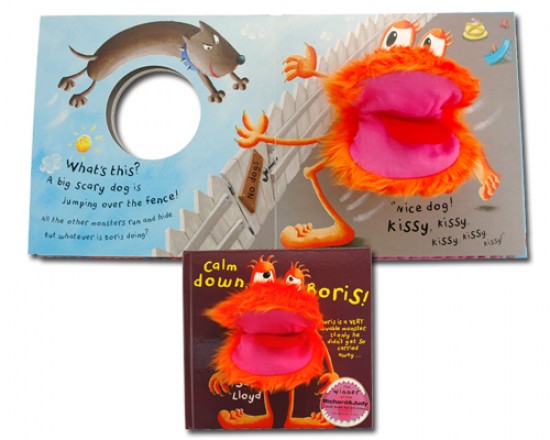
Calm Down Boris
* 3D and textured
book, with an added feature of a puppet (of Boris) through cut out
holes in the pages.
*Will create a family reading experience;
adults can use the puppet to interact with the books and read the
narrative together. It adds an extra fun element.
* Brightly
coloured that will easily catch the eye, especially for children of a
young age (perhaps up to pre-school)
*Kinesthetic learners will like
this book due to watching the puppet (or using the puppet themselves)
to learn the narrative of the story. It build on visual senses, along
with sight and feel. Verbal communication can be added through parents
speaking the narrative.
*With all of the additional features, it
becomes more than just a story which can be taken on in our designs for
further development when it comes to the main brief.
*We think it
is appropriate because it is 'different'. It has used a creative method
to communicate with it's target user which we have estimated to be up
until the age of 5. It could easily become a child's favourite book due
to the added features and family experience it creates.
The Curious Mind of Young Darwin
*This book is a lot more advanced, with lots of text (and claims the audience is 8 to 80+). We think that it is still very visual (through quite detailed, hand rendered illustrations that are easy to follow and relate too) with chunks of text.
*It used graphic information design, simplifying some complex information into smaller chunks.
*It is interesting because it's based on letters
from Charles Darwin (at a young age) so it is at quite a high
intellectual level.
*The book would suite visual learners due to the
amount of imagery and text to look at. It probably wouldn't be spoken
aloud, so would be a book a child would engage in themselves.
*The
book is age appropriate as it builds on the fact that children want to
explore at that age (about 8+).
*This book aso fits in with the
brief with the emphasis on adventure and getting outdoors and features
some ideas that could be used for reference.
I really liked the extra elements added in both of these books and felt that was something I wanted to incorporate into my book design. by having these extra elements in the book it makes it so much more than a story at allows the child to interact and feel a part of the story as it is being told. I also decided that I wanted to aim my book at 5-7 year olds and make it a book that would be used for parent and child engagement where they could learn about morals/values of life together.
pop up books
pop up books are a great idea for children to get interacted with a story, i think they look really nice especially this book of the lion, witch and the war
Tuesday, 19 February 2013
Task 02: Book Research Task
Identify one 'art style' that you feel would be appropriate for each of the following book genres/audiences
Information/Reference title - aimed at 9-11 year olds
I think books such as Horrible Histories and The way things work are ideal for this age range because although they provide a child with lots of information they do it in a interactive, fun way which I think is key for this age group. more text can be included in this type of book as long as there is Interesting Illustration, Well labelled diagrams that provides Simple Information Design.
it helps if the information is Quirky/Funny? to keep the reader Entertained
the aim is to Try to make Boring information more interesting! whist introducing Clear, Unwordy paragraphs
Baby Toddler - First Objects book
I think touch and feel books are most effective for this type of book especially for this age range. books such as have you ever tickled a tiger and DK'S touch and feel I feel are good example as they show Simple objects that even a young age will recognise/interact with.
the books should be big and easy to hold, especially for little hands, they must keep them intrigued with Bright colours, Textures and sometimes even introducing memorable Characters so a child can recognise helps. illustrations should be too complex and can just be Simple outlines
the book not have Very many words (maybe just word of Object)
Picture Book- Aimed at 3-6 year olds
these are my favourite genre of books. ten little fingers and ten little toes and hungry caterpillar are good examples. it is also important that these types of books are big and easy to hold. some good techniques shown in picture books are:
Lift up Flap interaction
ones that Spark imagination
Game in Story
Repetition
Memorable Characters
Textures
Bright pictures
Maybe teach morals/lessons
Interactive - gets child involved.
Information/Reference title - aimed at 9-11 year olds
I think books such as Horrible Histories and The way things work are ideal for this age range because although they provide a child with lots of information they do it in a interactive, fun way which I think is key for this age group. more text can be included in this type of book as long as there is Interesting Illustration, Well labelled diagrams that provides Simple Information Design.
it helps if the information is Quirky/Funny? to keep the reader Entertained
the aim is to Try to make Boring information more interesting! whist introducing Clear, Unwordy paragraphs
Baby Toddler - First Objects book
I think touch and feel books are most effective for this type of book especially for this age range. books such as have you ever tickled a tiger and DK'S touch and feel I feel are good example as they show Simple objects that even a young age will recognise/interact with.
the books should be big and easy to hold, especially for little hands, they must keep them intrigued with Bright colours, Textures and sometimes even introducing memorable Characters so a child can recognise helps. illustrations should be too complex and can just be Simple outlines
the book not have Very many words (maybe just word of Object)
Picture Book- Aimed at 3-6 year olds
these are my favourite genre of books. ten little fingers and ten little toes and hungry caterpillar are good examples. it is also important that these types of books are big and easy to hold. some good techniques shown in picture books are:
Lift up Flap interaction
ones that Spark imagination
Game in Story
Repetition
Memorable Characters
Textures
Bright pictures
Maybe teach morals/lessons
Interactive - gets child involved.
Wednesday, 13 February 2013
Task 01: Childrens Illustrators - Initial Research.
Task One
For the first task we had to identify four different illustrators that we liked the style of, I especially ones I remembered growing up/ my siblings growing up, ones that I considered to be timeless classics and unique in there styles:
* Anita Jeram - Guess how much I Love You
* David McKee - Elmer the Elephant
* Eric Carle - The Hungry Catapillar
* Judith Kerr - The Tiger who came to Tea
I chose these illustrators as they are from books I remember from either my childhood whilst learning to read or while helping my younger siblings to read.
I like these illustrators in particular as I like that they have their own 'art style' and characters remain slightly familiar in characteristics even if its a different book.
the colours are bright and the outlines aren't too complex and easy to understand and follow which I think is key when it comes to Childrens book design.
Judith Kerr
Judith Kerr, Born 14th June 1923, is a Author and an Illustrator, she has produced titles such as: 'The Tiger who came to Tea' (above) When Hitler Stole Pink Rabbit, The great Granny gang 'Adventures of Mog the Cat' (below) which is a 17 series of books.
she began this career later in life and was inspired by her own experiences and the want to make non-humans more human like, she was also inspired by her own children.
The Tiger who came to Tea first published in 1968. is one of the best selling childrens' books of all time -- it took over a year to write/illustrate.
Judith Kerr keeps text very simple in her books and communicates through illustration. in her Mog books she illustrates 'facial expressions' to determine an action.
Mog - who was inspired by her own cat, Goodbye Mog - the final book of the series, to tackle an effect that every chld must deal with saying goodbye to a pet.
you can tell all of Judiths books are illustrated in the same way. simple outlines with crayon colouring and cartoony style drawing with facial expressions.
tiger who came to tea is based on childrens imagination so restricted by adults that the idea of a tiger emptying everything in the house is wonderful.
it is important to be in the mindset of a child - knowing the target audience.
one of the reasons Judith did childrens' illustration was the frustration of the selection available when her children were learning how to read.
Subscribe to:
Comments (Atom)


Front Cover, Back Cover & Spine